College of Engineering Holds General Faculty Meeting, Spring Semester 2026
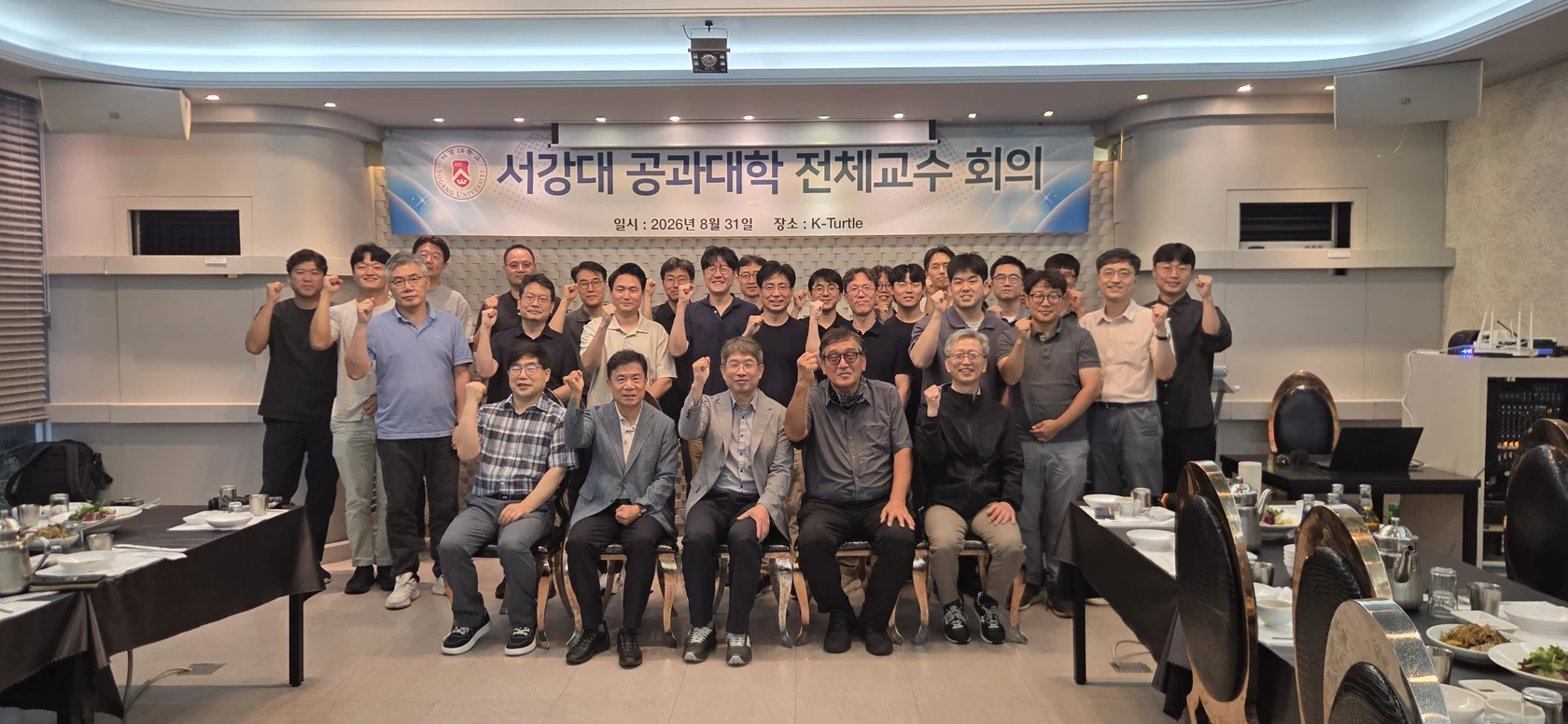
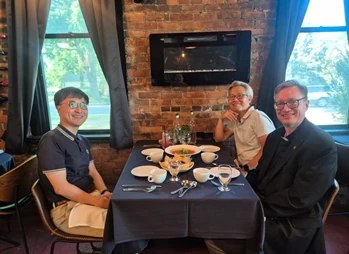
▲ College of Engineering general faculty meeting, Spring semester 2026
The College of Engineering held its general faculty meeting for the Spring semester 2026 on August 31 (Mon.), 2026, at Geogujang.
At the meeting, faculty members were briefed on key issues facing the College, followed by a lecture by Advisory Professor Euiho Suh on the College’s future direction and on improving its standing in the QS rankings. The lecture introduced the main indicators and methodology of the QS World University Rankings and analyzed the results and key trends for Sogang University and the College of Engineering. It also outlined university-level strategies for improving the rankings and ways for faculty to participate and collaborate, exploring how to strengthen the College’s competitiveness.
Afterward, the attending faculty members shared dinner, strengthening their ties and fellowship.
Events
Department of Chemical and Biomolecular Engineering Holds 2026 Research Exchangewith the University of Notre Dame
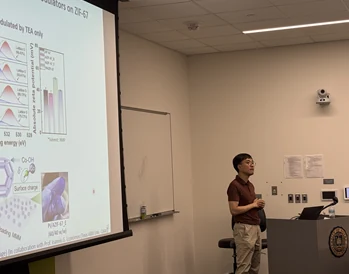
On July 29 (Wed.), 2026, Department Chair Jong Suk Lee of the Department of Chemical and Biomolecular Engineering visited the University of Notre Dame for a research exchange between the two universities.
Profs. Nosang Myung, Bryan Paulsen, Ruilan Guo and Merlin Bruening took part in the meeting, discussing ongoing research projects and building closer ties. Since a delegation from the University of Notre Dame visited Sogang University in July 2025, the Department of Chemical and Biomolecular Engineering has continued research and student exchanges with the university.
Events
Department of Chemical and Biomolecular Engineering Holds Graduate Student Research Seminars, Spring Semester 2026
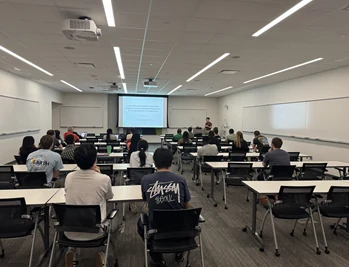
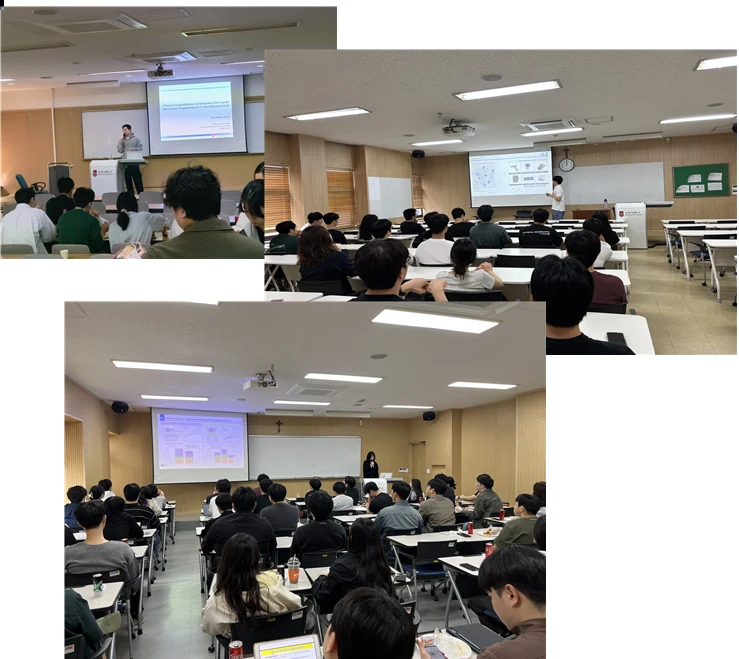
Since the Spring semester 2025, the Department of Chemical and Biomolecular Engineering has held graduate student research seminars every semester to share the outstanding research of its graduate students. In the Spring semester 2026, the department again held seminars featuring the work of its outstanding graduate students, as listed below.
March 27, 2026: Researcher Tae-hwan Kim (advisor: Prof. Byung-Keun Oh), K401
Process Intensification via Integrated Gas-Liquid-Biocatalyst Engineering in C1 Gas Bioconversion
April 17, 2026: M.S. student Yu-ji Kye (advisor: Prof. Hyun-Seok Cho), K404
Effect of Porosity and Wettability Gradient on Cathode Water Management in AEM Water Electrolysis
May 22, 2026: M.S. student Jun-yeop Yoo (advisor: Prof. Choongik Kim), K404
Fabrication of High-Mobility Single-Crystal Organic Field-Effect Transistors via Anti-Solvent Crystallization
June 26, 2026: Integrated M.S.-Ph.D. student Young-hwan Ahn (advisor: Prof. Jeyoung Park), K304
Synergitic Low-Temperature Upcycling of Post-Consumer PET into Engineering-Grad PBT
July 24, 2026: Integrated M.S.-Ph.D. student Jin-ho Keum (advisor: Prof. Moon Sung Kang), K304
Quantum dots with photopolymerisable ligands for green-solvent direct photolithography
Each seminar drew some 60 to 80 graduate students and undergraduate researchers from the department, who shared outstanding research results and engaged in lively discussion and exchange of ideas.
Retiring Faculty
At the end of the Spring semester 2026, Prof. Do-young Jeon retired.
Mechanical EngineeringProf. Do-young Jeon
We are deeply grateful for your dedication to the Sogang University College of Engineering. We will continue to grow, following in your footsteps.
New Faculty
Starting from the Fall semester of 2026, Prof. Sung-hyun Lee and Prof. Woong Lee have joined the Sogang University College of Engineering.
Chemical and Biomolecular EngineeringProf. Sung-hyun Lee
Education
B.S. Sogang University (2014)
Ph.D. Sogang University (2020)
Field
Chemical and Biomolecular Engineering / Bio-Convergence Technology
Career
Associate Professor, Sungkyunkwan University
Chemical and Biomolecular EngineeringProf. Woong Lee
Education
B.S. Purdue University (2008)
Ph.D. Seoul National University (2014)
Field
School of Chemical and Biological Engineering
Career
Senior Researcher and Principal Researcher, Clean Energy Research Center, KIST
Department News
Department News
Prof. Suk-Ju Kang’s Research Team (Electronic Engineering)Has Paper on 4D Gaussian Splatting Acceptedat ECCV 2026, a Top AI Conference
A paper by a joint research team comprising Prof. Suk-Ju Kang’s research team in the Department of Electronic Engineering at Sogang University (integrated M.S.-Ph.D. students Su-woong Yeom and Jun-sik Nam, and M.S. student Seung-gyu Choi), Dr. Jun-soo Kim (ETRI), Dr. Kuk-jin Yoon (ETRI), Lucas Yunkyu Lee (POSTECH), Sang-min Kim (Seoul National University), Prof. Jae-sik Park (Seoul National University), and Prof. Kyung-bo Kong (Pusan National University) was accepted at ECCV 2026 (European Conference on Computer Vision), one of the most prestigious international conferences in computer vision and artificial intelligence. Together with CVPR and ICCV, both organized by IEEE/CVF, ECCV is regarded as one of the world’s top three conferences in computer vision and machine learning.
The accepted paper, titled “TRiGS: Temporal Rigid-Body Motion for Scalable 4D Gaussian Splatting,” is the first to propose TRiGS, a new 4D Gaussian Splatting (4DGS) modeling technique that can effectively render long dynamic videos.
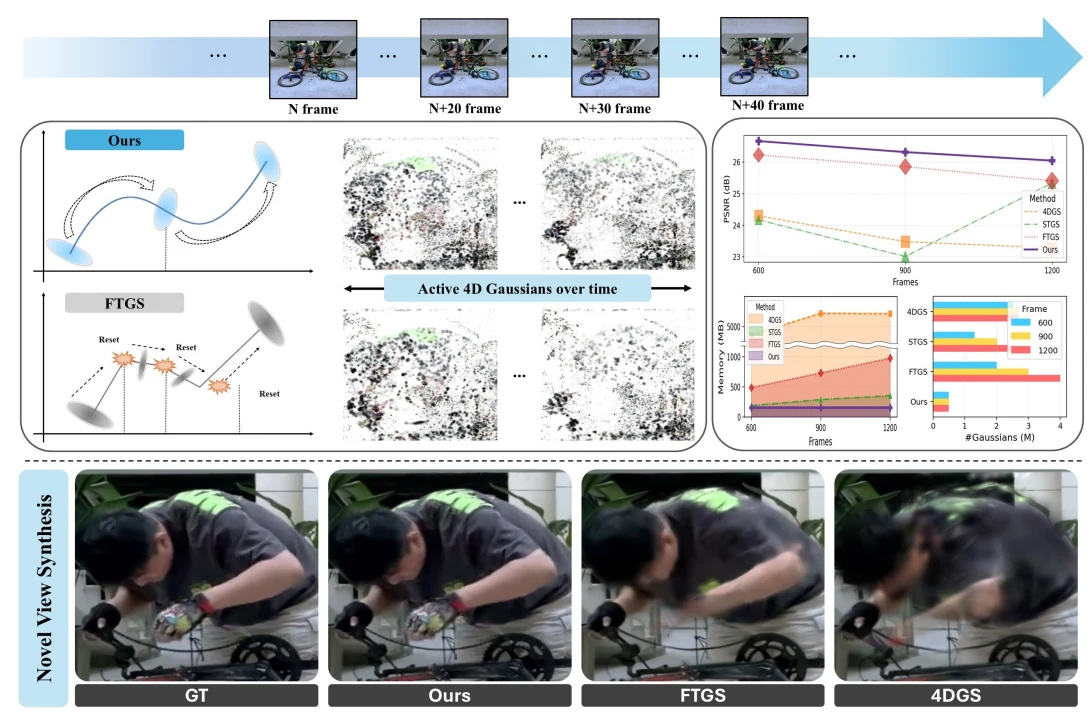
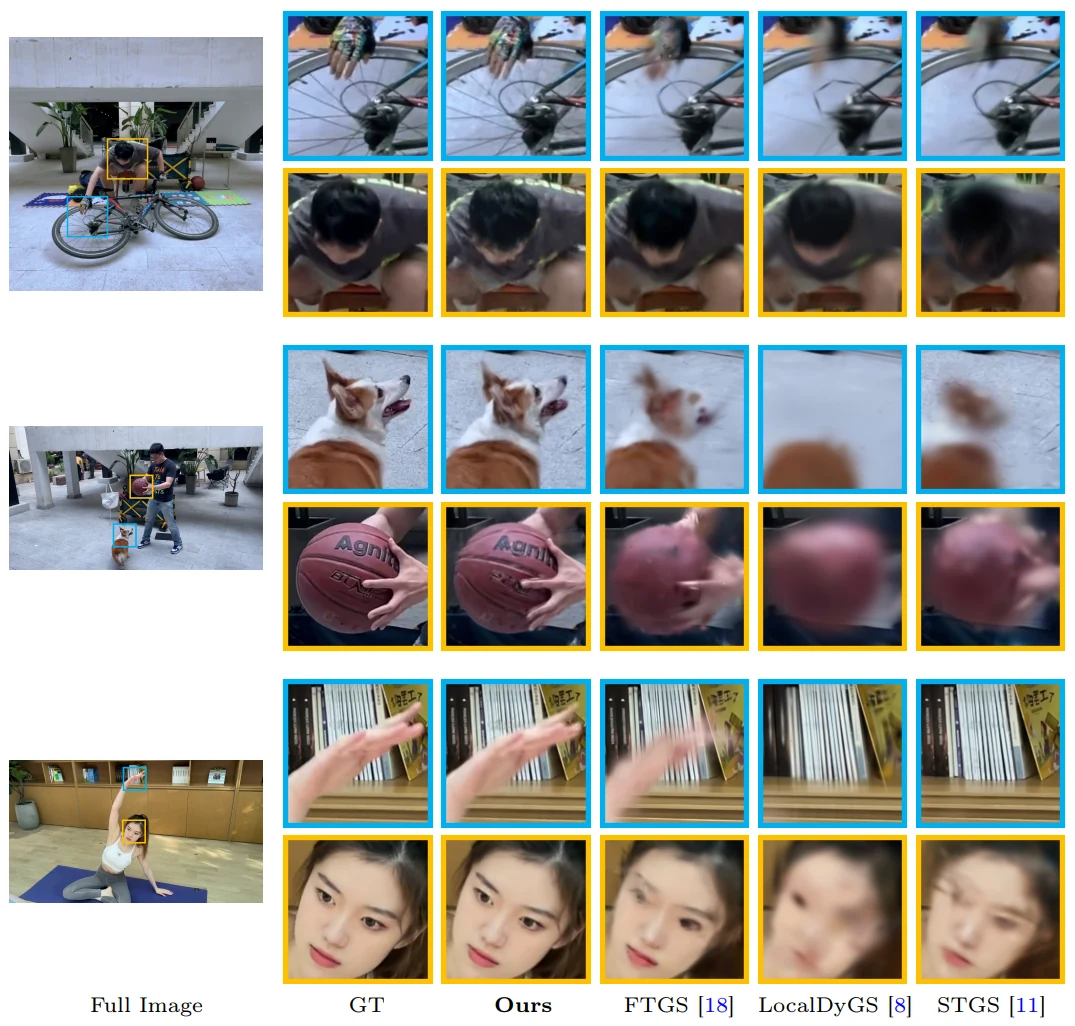
The team pointed out that when handling complex object motion, existing 4D Gaussian Splatting models rely on short temporal windows or piecewise linear velocity approximations, forcing them to continually remove and regenerate Gaussians, a problem known as “temporal fragmentation.” This undermines the long-term temporal identity of objects and causes memory usage to explode, severely limiting their use on long video sequences.
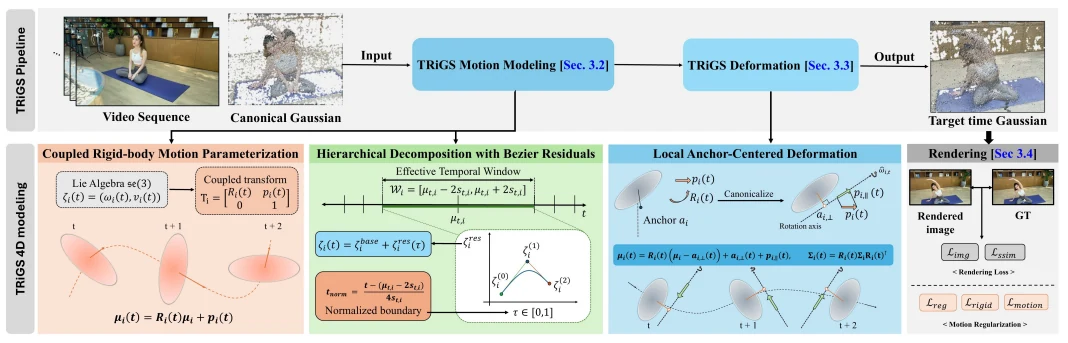
To resolve this performance bottleneck, the team moved away from piecewise approximations and developed TRiGS, which optimizes rigid-body motion using “continuous geometric transformations.”
At the core of the paper are a “coupled SE(3) transformation,” which unifies complex rotation and translation into a single continuous transformation, and “hierarchical Bezier residual” blocks, which precisely capture nonlinear motion. The team also introduced “local anchors,” which assign each Gaussian its own independent center of rotation instead of relying on a single global center, achieving stable and fine-grained local motion optimization.
As a result, the method fundamentally suppresses unnecessary Gaussian proliferation, limiting the total number of model parameters to about 0.5M (roughly 160MB), while outperforming existing state-of-the-art models. In experiments on major benchmark datasets such as N3V and SelfCap, TRiGS delivered remarkably stable dynamic view synthesis even on long sequences of 600 to 1,200 frames, without significant memory overhead or loss of rendering quality.
The participating students said, “We were able to achieve this result thanks to Prof. Suk-Ju Kang’s thoughtful guidance and the generous help of our labmates. We are delighted to have a paper accepted at a top computer vision conference, and we will keep working hard to produce meaningful research.”
▲ Differences between the proposed method and existing methods▲ Proposed motion modeling▲ Qualitative comparison between existing methods and the proposed method
‣Title: TRiGS: Temporal Rigid-Body Motion for Scalable 4D Gaussian Splatting
‣Authors: Su-woong Yeom, integrated M.S.-Ph.D. student (co-first author), Jun-sik Nam, integrated M.S.-Ph.D. student (co-first author), Seung-gyu Choi, M.S. student (co-first author), Lucas Yunkyu Lee, Sang-min Kim, Prof. Jae-sik Park, Dr. Jun-soo Kim, Dr. Kuk-jin Yoon, Prof. Kyung-bo Kong (co-corresponding author), Prof. Suk-Ju Kang (co-corresponding author)
Department News
Prof. Sungju Ryu’s Research Team (Electronic Engineering)Has Paper Accepted at ICCAD 2026,a Top Conference in Semiconductor Design Automation
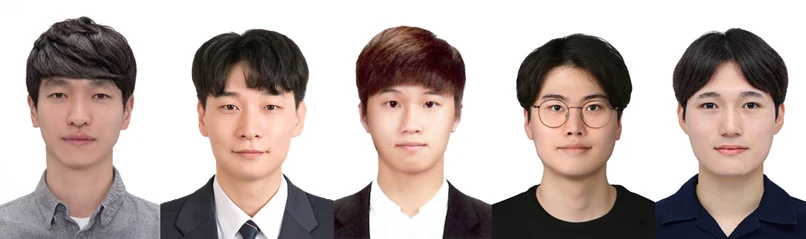
▲ (From left) Prof. Sungju Ryu, M.S. student Jae-woong Ryu, integrated M.S.-Ph.D. student Seong-min Ki, M.S. student Jae-ha Park, and integrated M.S.-Ph.D. student Sang-gyu Jeon
A paper by the research team of Prof. Sungju Ryu of the Department of System Semiconductor Engineering, the Department of Electronic Engineering, and the Department of Semiconductor Engineering was accepted at the International Conference on Computer-Aided Design (ICCAD) 2026, a top conference in semiconductor design and automation. Launched in 1982, ICCAD is a prestigious international conference that has led advances in semiconductor and VLSI (very-large-scale integration) design and related technologies. This year’s conference will be held November 8–12 in San Jose, USA.
The paper, titled “Mosaic: Fast Sparse Matrix Factorization with Parallel Tiling-Merging Computation,” was led by M.S. student Jae-woong Ryu, together with integrated M.S.-Ph.D. student Seong-min Ki, M.S. student Jae-ha Park, and integrated M.S.-Ph.D. student Sang-gyu Jeon.
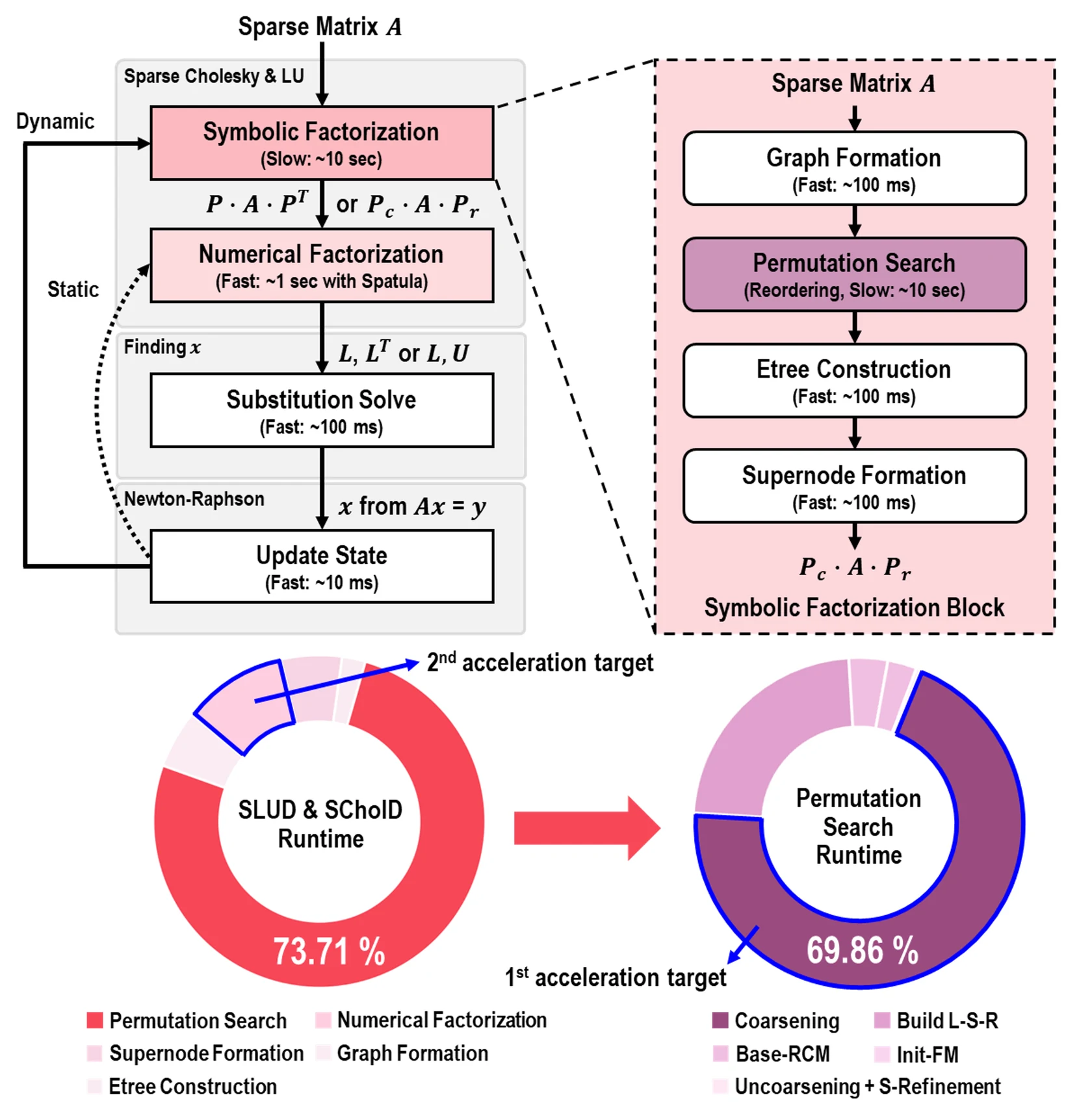
Sparse matrix factorization is a key technique used in fields ranging from engineering simulation to modern machine learning. Recent hardware accelerators have greatly sped up the numerical factorization stage, but coarsening, the graph-simplification step in symbolic factorization, has emerged as a new bottleneck that limits overall performance gains.
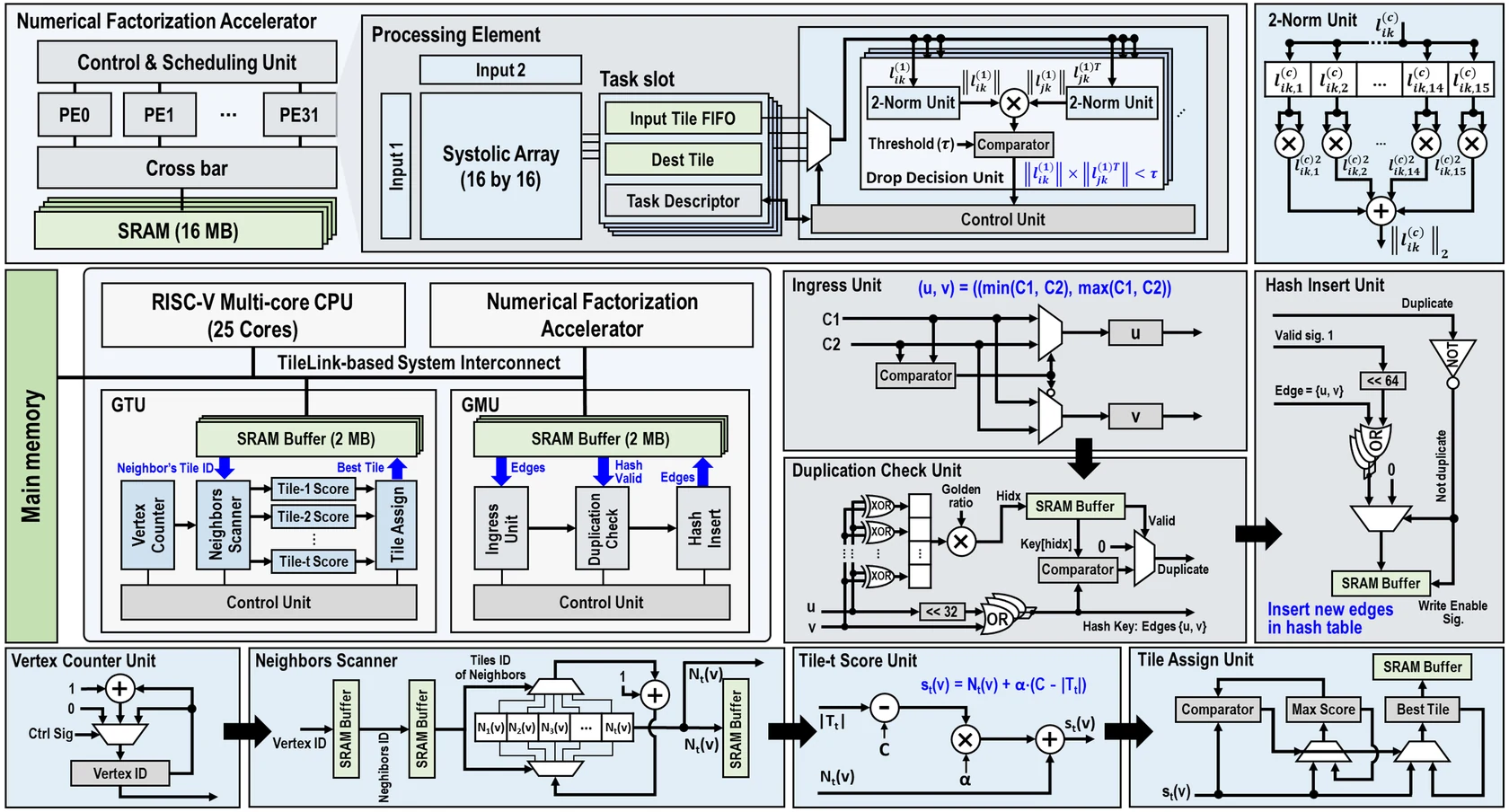
To address this problem, the team developed Mosaic, a new hardware accelerator that parallelizes the coarsening process by introducing a tiling and merging pipeline. In addition, the team applied Selective DGEMM Dropping, a technique that selectively skips operations with little impact on the result during numerical factorization, further increasing computation speed while maintaining accuracy.
In experiments on 28 matrices with diverse characteristics, the Mosaic accelerator maintained practical numerical accuracy while achieving average speedups of 2.31× for Cholesky factorization and 1.72× for LU factorization over state-of-the-art hardware accelerators, with a dramatic reduction in computation time of up to 6.74×. The work is expected to help maximize the efficiency of complex circuit simulation and large-scale optimization.
▶ Title: Mosaic: Fast Sparse Matrix Factorization with Parallel Tiling-Merging Computation
▶ Authors: Jae-woong Ryu (first author), Seong-min Ki (second author), Jae-ha Park (third author), Sang-gyu Jeon (fourth author), Prof. Sungju Ryu (corresponding author)
Department News
Prof. Hongseok Kim’s Research Team (Electronic Engineering)Launches Development of Core Technologies for the AI Transformation of the National Power Grid
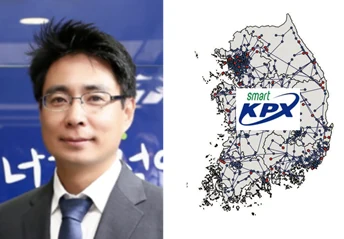
▲ Prof. Hongseok Kim of the Department of Electronic Engineering
Leading core research on AI-based power grid optimization in a KRW 29.5 billion government-funded national AI-EMS project
Prof. Hongseok Kim’s research team at Sogang University is taking part as a key research institution in a major national R&D project that will shape the future of national power grid operation.
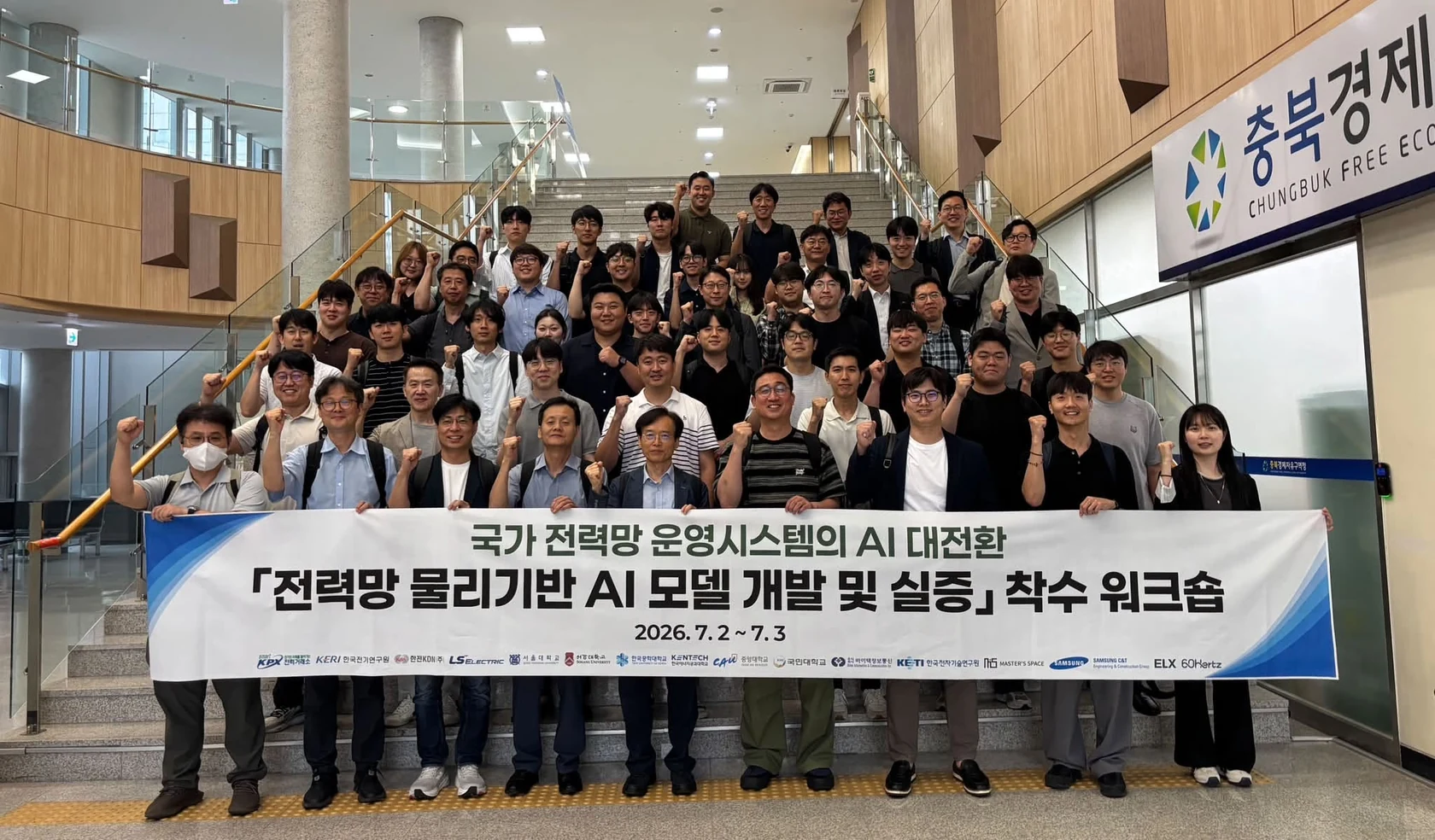
Sogang University attended the kickoff workshop for “AI Transformation of the National Power Grid Operating System – Development and Demonstration of Physics-Based AI Models for the Power Grid,” held July 2–3, 2026, in Osong, North Chungcheong Province, marking the official start of the national AI-EMS (Energy Management System) development project, which will run for the next five years.
The project is a large-scale national R&D program running from 2026 to 2030 with KRW 29.5 billion in government funding. Director Young-min Choi of the Korea Power Exchange (KPX) and Dr. Sang-won Min of the Korea Electrotechnology Research Institute (KERI) serve as principal investigators of the respective sub-projects. Sogang University will receive a total of KRW 1.25 billion in research funding to develop a next-generation national power grid operating system (AI-EMS) together with leading Korean universities and companies in electrical engineering. Going beyond conventional rule-based operation, AI-EMS is a core national infrastructure technology that uses artificial intelligence to respond in real time to rapidly growing renewable energy and shifting electricity demand. Since the power grid underpins national industry and everyday life, the project is regarded as an important national initiative to shift Korea’s power operation paradigm toward AI.
AI builds the “brain” of the national power grid
In this project, Prof. Hongseok Kim’s research team is responsible for developing AI-based AC Optimal Power Flow (AI AC-OPF) and AI-based Unit Commitment (AI UC) technologies. AC-OPF is a core technology that computes the most economical yet secure operating state of the power grid by considering generator outputs and transmission network conditions simultaneously, while Unit Commitment is the key decision-making problem in national power operation that determines when and how hundreds of power plants are dispatched. The two are known as the core engines that demand the most computation time in today’s national grid EMS, and their importance grows as renewable energy expands and the grid becomes more complex. By applying physics-informed AI technology, which combines artificial intelligence with physical models, Sogang University plans to develop next-generation AI algorithms that dramatically improve computation speed while maintaining the high reliability of conventional optimization algorithms.
Sogang, a university without an electrical engineering department, leads AI for the national power grid
The project is also highly significant in that Sogang University, which has no department of electrical engineering, has been entrusted with developing core AI technology for national power grid operation. Drawing on research strengths built up in artificial intelligence, optimization, GPU parallel computing, and physics-informed AI, the Department of Electronic Engineering has been establishing a new research paradigm that fuses traditional power engineering with AI. Through this project, Sogang University will go beyond AI algorithm research to develop core technologies applied to the actual national power grid operating system, and is expected to establish itself as a world-leading research institution in national energy AI.
Sogang University prepares for the era of national AI infrastructure
AI is rapidly spreading beyond semiconductors, healthcare, and manufacturing into national infrastructure. The power grid in particular is the core infrastructure on which all industries depend, and AI-based EMS is drawing attention as a key technology that can simultaneously support national energy security, carbon neutrality, and the expansion of renewable energy. Over the next five years, the Sogang research team will work closely with the participating institutions to develop and demonstrate core AI source technologies for next-generation national power grid operation. The research is expected not only to accelerate the digital transformation of Korea’s power grid but also to lay the foundation for leadership in global AI-based energy management technology.
Department News
Prof. Wonjin Sung’s Research Team (Electronic Engineering)at the Digital Transmission LabDevelops AI-Based 5G Beamforming Technology in Joint Research with KMW Inc.
▲ (From left) KMW Inc. logo, Prof. Wonjin Sung, Prof. Sang-cheon Park (Soonchunhyang University), Ph.D. student Je-woo Ko, and Ph.D. student Tae-je Park
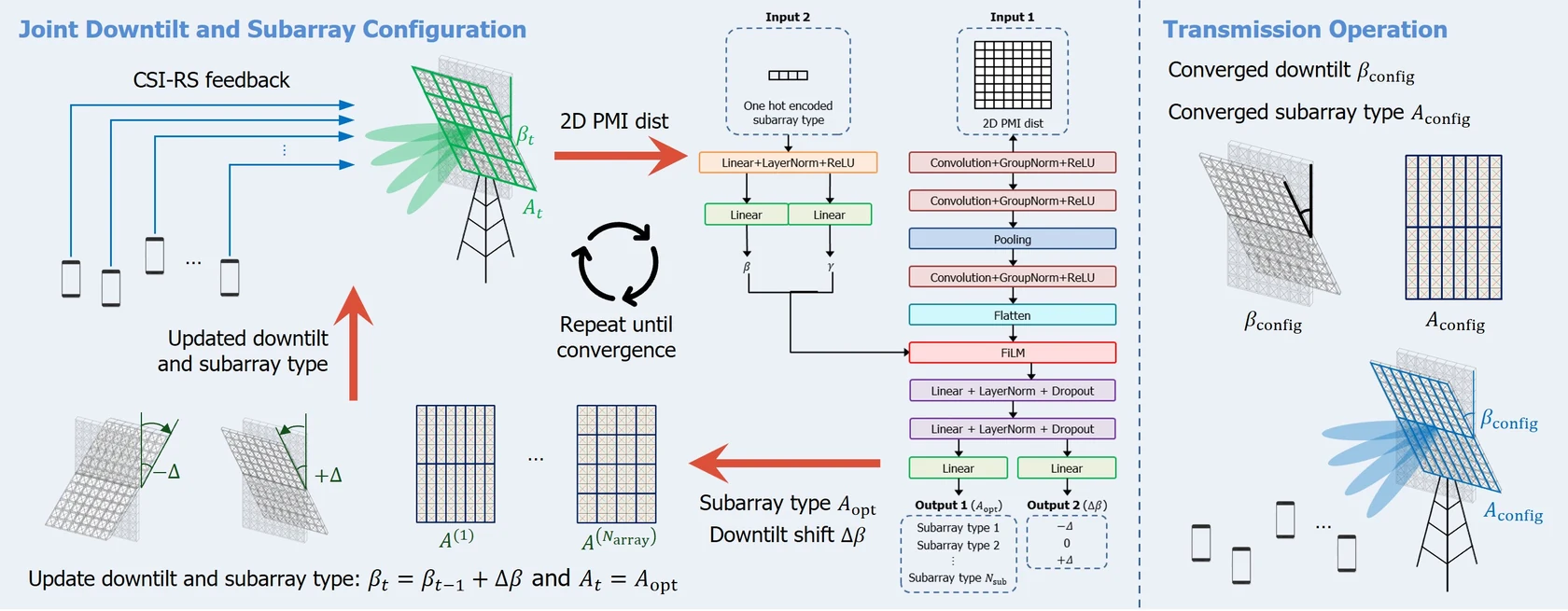
With the support of and in joint research with KMW Inc., a company founded by an alumnus of the Department of Electronic Engineering, the department’s Digital Transmission Lab built a mobile communication simulator based on the 3GPP 5G NR standard and used it to develop AI-based 5G beamforming technology that maximizes the performance and utility of KMW’s large-scale antenna arrays. Focusing on KMW’s existing 192AE/32TRX large-scale antenna array, the team proposed an operating scheme that intelligently adjusts the subarray structure and tilt according to the communication environment without modifying the existing hardware, increasing the utilization of the antenna hardware and improving transmission performance and energy efficiency.
The joint research involved Prof. Wonjin Sung of the Department of Electronic Engineering, Prof. Sang-cheon Park (Soonchunhyang University), and Ph.D. students Je-woo Ko and Tae-je Park. The team developed a mobile communication simulator, based on the 3GPP 5G NR standard, that can analyze the performance of large-scale antenna systems at the system level. The simulator was designed to flexibly apply a wide range of system parameters, including various antenna and subarray structures, antenna tilt, user distribution, and channel conditions, so that beamforming and system transmission performance can be quantitatively compared and evaluated across mobile communication environments and antenna configurations. This provides an environment for analyzing and validating system performance under various antenna operating conditions in advance.
Using the 3GPP 5G NR-based simulator built through the joint research, Ph.D. student Tae-je Park, under the guidance of Prof. Wonjin Sung, led research that systematized, both theoretically and academically, the operating principles, optimization methods, and system performance of an AI-based dynamic subarray operation technology designed to increase the utilization of KMW’s large-scale antenna arrays, and wrote it up as a paper. The paper, titled “AI/ML-Driven Operation of Large-Scale Dynamic Subarrays in Sub-6 GHz Under 5G NR Standards,” was published in IEEE Transactions on Vehicular Technology (IF 7.5, top 11% in JCR), a prestigious international journal.
The paper proposes a deep learning-based method for dynamically optimizing the subarray structure and tilt of large-scale antenna arrays using 3GPP 5G NR Precoding Matrix Indicator (PMI) feedback, and quantitatively verifies its effectiveness. In simulations, the method improved the average sum rate by about 13% over a conventional fixed antenna configuration, and improved energy efficiency by about 273% while reducing the number of RF chains to about one-sixth of that of a fully digital array. The study is significant in that it validates the academic soundness of the technology developed through the joint research and, by combining industry’s existing antenna hardware with 3GPP standard-based mobile communication simulation and AI-based operation technology, demonstrates the potential to increase the utilization of large-scale antenna arrays and apply them to real 5G systems.
▶ Title: AI/ML-Driven Operation of Large-Scale Dynamic Subarrays in Sub-6 GHz Under 5G NR Standards
▶ Journal: IEEE Transactions on Vehicular Technology (IF 7.5, top 11% in JCR)
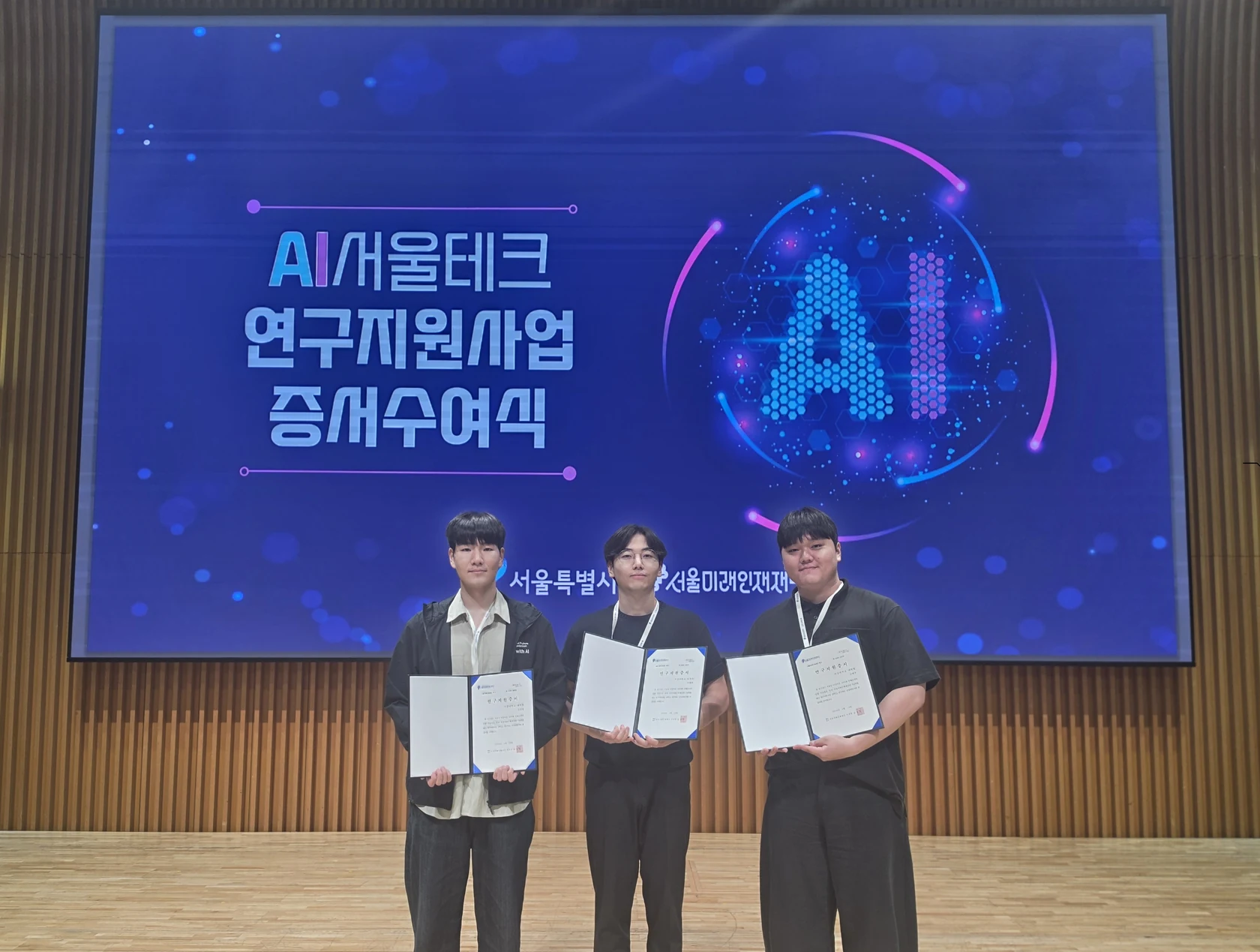
Ph.D. Students Tae-je Park and Je-woo Ko (Electronic Engineering; advisor: Prof. Wonjin Sung)and Ph.D. Student Moon-il Kim (advisor: Prof. Jaewoo So)Selected for the 2026 AI Seoul Tech Research Support Program
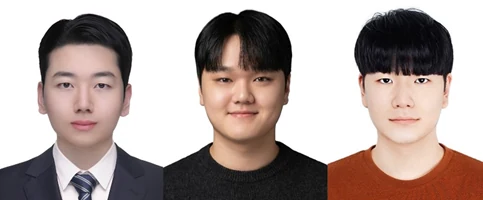
▲ (From left) Ph.D. student Tae-je Park, Ph.D. student Je-woo Ko, and Ph.D. student Moon-il Kim
Ph.D. students Tae-je Park and Je-woo Ko of the Digital Transmission Lab (advisor: Prof. Wonjin Sung) and Ph.D. student Moon-il Kim of the Communication Networks Lab (advisor: Prof. Jaewoo So) in the Department of Electronic Engineering were selected for the 2026 AI Seoul Tech Research Support Program, funded by the Seoul Future Talent Foundation.
The AI Seoul Tech Research Support Program is run by the Seoul Metropolitan Government and the Seoul Future Talent Foundation to discover and support outstanding research talent in AI. In 2026, the program selected a total of 255 AI researchers, including 85 Ph.D. students, with a total budget of KRW 7.6 billion. The three students were chosen after a multi-stage review that included document screening of their research records and research plans and an interview assessing their research capabilities. Each awardee will receive KRW 40 million in research funding for one year.
With this support, the students will further deepen their research at the intersection of AI and next-generation communication technologies. The Department of Electronic Engineering is actively pursuing research that brings AI into next-generation mobile communications and communication networks, carrying out a wide range of studies that use AI to improve the performance and operational efficiency of communication systems, from the wireless physical layer to network technologies. Building on these efforts, the department has consistently produced outstanding results in the field, and this selection is further evidence of its research strength in AI and communications convergence. Even more meaningful research outcomes are expected to follow in the convergence of AI and next-generation communication technologies.
Department News
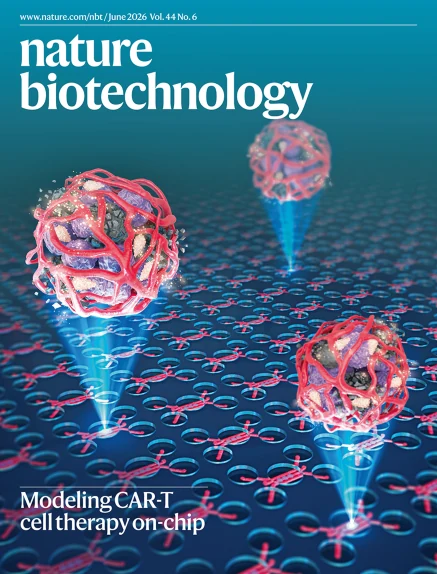
International Joint Research by the Sogang-UPenn Convergence Research Center (Chemical and Biomolecular Engineering)Featured on the Cover of Nature Biotechnology– World’s First In Vitro Platform for CAR-T Immunotherapyin Vascularized Human Solid Tumors
International joint research from the Sogang-UPenn Convergence Research Center for Emerging Infectious Disease Theranostics, jointly established by Sogang University and the University of Pennsylvania (co-principal investigators: Prof. Taewook Kang of Sogang University and Prof. Dan Huh of the University of Pennsylvania), was selected as the cover article of Nature Biotechnology (Impact Factor: 41.7), one of the most prestigious journals in the life sciences.
The cover study is the world’s first to develop a tumor-on-a-chip platform that vascularizes actual human solid tumor tissue, enabling precise in vitro evaluation of the anticancer effects of CAR-T cells. By overcoming the limitations of conventional 2D cell culture and animal testing and precisely reproducing the tumor microenvironment inside the human body, the work opens new possibilities for developing next-generation immune cell therapies and for research on personalized cancer treatment.
The research was supported by the Ministry of Science and ICT (MSIT) Global Research Collaboration Hub Program with Leading Overseas Research Institutions and was carried out as international joint research centered on the Sogang-UPenn Convergence Research Center for Emerging Infectious Disease Theranostics. The selection as a Nature Biotechnology cover article is regarded as a landmark achievement demonstrating the center’s world-class research competitiveness and international collaborative capabilities.
* Funding and research team
This research was supported by the MSIT Global Research Collaboration Hub Program with Leading Overseas Research Institutions (Grant No. RS-2023-00259341).
Key researchers: Prof. Taewook Kang (Department of Chemical and Biomolecular Engineering, Sogang University), Prof. Dan Huh (Bioengineering, University of Pennsylvania)
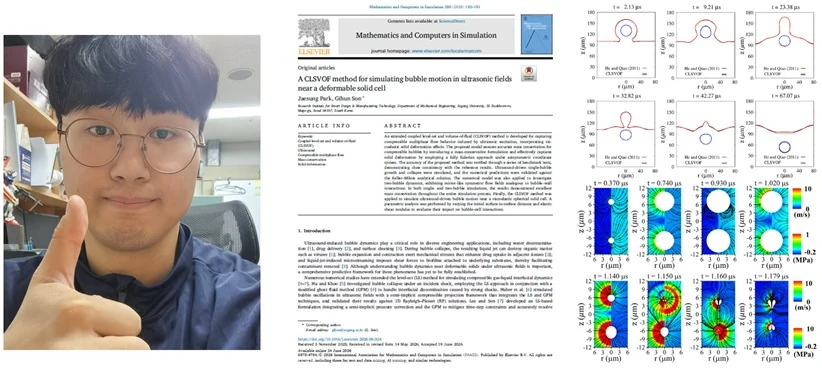
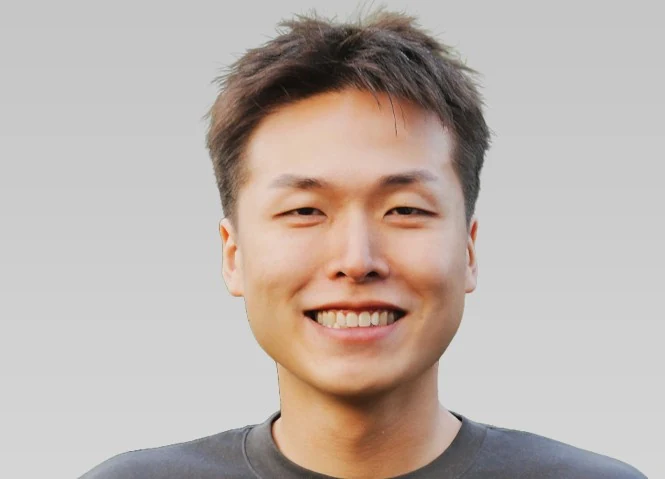
Prof. Gihun Son (Mechanical Engineering)Publishes in Mathematics and Computers in Simulation,a Top Journal in Applied Mathematics
Research by Prof. Gihun Son’s lab (first author: Ph.D. student Jae-sung Park) was published in Mathematics and Computers in Simulation, a top 1.0% journal in applied mathematics.
Among interface-tracking techniques for multiphase flow, the VOF method is widely used in a variety of applications thanks to its volume-conserving properties. In computing ultrasonic cavitation bubbles, however, the nature of the VOF algorithm imposes limitations on mass conservation and on calculating the geometric properties of the interface.
In this study, the team developed a CLSVOF (coupled level-set and volume-of-fluid) method to overcome these limitations and validated it on a range of multiphase flow problems. The team computed bubble-bubble and bubble-cell interactions under ultrasonic conditions and numerically analyzed their validity.
- Title: A CLSVOF method for simulating bubble motion in ultrasonic fields near a deformable solid cell
- Authors: Jae-sung Park, Gihun Son (advisor)
Department News
Prof. Choongsoo Shin (Mechanical Engineering)Selected for the 2026 MSIT Basic Research Laboratory Program
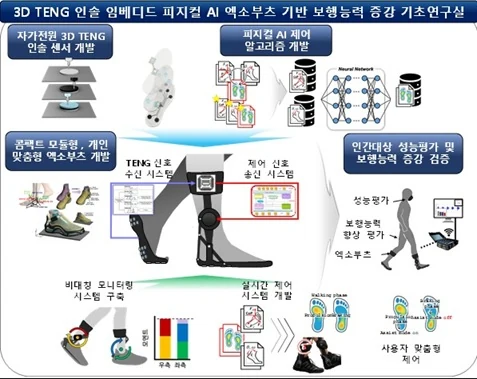
A joint research team consisting of Prof. Choongsoo Shin (principal investigator), Prof. Namkeun Kim, and Prof. Jihwan Song of the Department of Mechanical Engineering, together with Prof. Hyung-seok Lee of the School of Mechanical and Convergence Engineering at Kangwon National University, was newly selected for the 2026 Advanced Basic Research Laboratory Program, administered by the Ministry of Science and ICT (MSIT) and the National Research Foundation of Korea (NRF).
The project, titled “Basic Research Laboratory for Gait Augmentation Based on Physical AI Exo-Boots with Embedded 3D TENG Insoles,” will receive a total of KRW 1.5 billion over three years, from July 2026 to June 2029.
Demand for exoskeletons and exosuits that assist walking and work is growing, but current technologies still face many limitations for use in real-world environments. The project aims to develop compact, modular exo-boots that minimize external actuation cables. The team plans to implement a gait-sensing module by developing self-powered TENG sensor insoles and to control the exo-boots with intelligent AI control algorithms capable of real-time diagnosis and adaptation. The team will also demonstrate the gait-augmentation effects of the exo-boots through human-subject experiments.
Department News
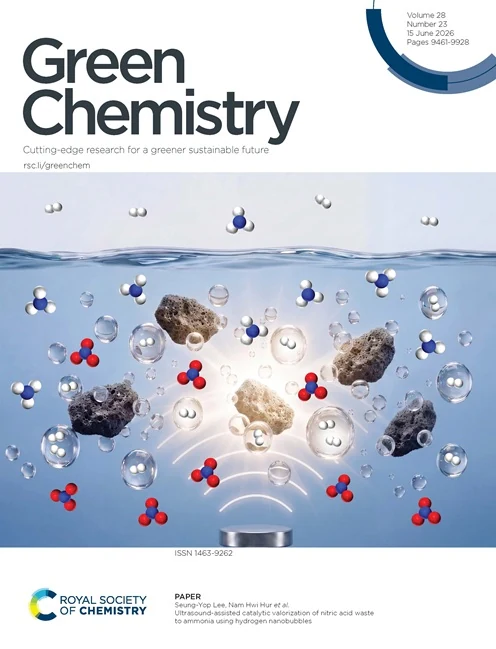
Prof. Seung-Yop Lee (Mechanical Engineering)Publishes Cover Article in the Leading Journal Green Chemistry
A paper from Prof. Seung-Yop Lee’s lab in the Department of Mechanical Engineering, written in collaboration with a research team from the Department of Chemistry, was published as the cover article of the June 15, 2026 issue of Green Chemistry (IF 10.6), a leading journal in the green energy field.
Dr. Han-bok Seo of the Department of Mechanical Engineering and Dr. Hee-sun Park of the Department of Chemistry are co-first authors, with Prof. Seung-Yop Lee and Prof. Nam-hoe Heo of the Department of Chemistry as co-corresponding authors. Combining the Department of Mechanical Engineering’s high-concentration hydrogen nanobubble technology with the Department of Chemistry’s ruthenium catalyst technology, the groundbreaking study produces ammonia, a promising hydrogen carrier, from waste nitric acid at low temperature and low pressure.
Ammonia is still produced by the Haber-Bosch process under high temperature (400–500°C) and high pressure (over 200 atm). This study is a fundamental breakthrough showing that ammonia can be produced from waste nitric acid at low temperature (60°C) and low pressure (under 10 atm) using nanobubbles and a catalyst, and through future commercialization research it is expected to have a major impact in the transition to a hydrogen economy. The research was supported by the NRF Pioneer Challenge Program.
▶ Title: Ultrasound-assisted catalytic valorization of nitric acid waste to ammonia using hydrogen nanobubbles
▶ Authors: Hee-sun Park, Han-bok Seo, Heung-bin Lim, Seung-Yop Lee, Nam-hoe Heo
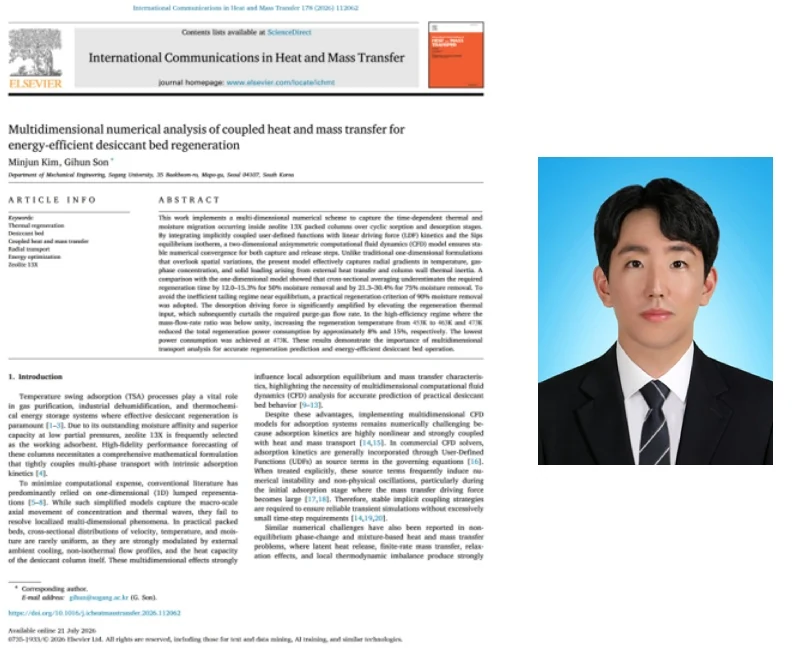
Prof. Gihun Son (Mechanical Engineering)Publishes in International Communications inHeat and Mass Transfer,a Leading Journal in Heat and Mass Transfer
Research conducted by Prof. Gihun Son’s lab in the Department of Mechanical Engineering was published in International Communications in Heat and Mass Transfer, an international journal in heat and mass transfer. The journal is a prestigious SCIE-indexed international journal ranked in the top 7.8% in JCR. M.S. student Min-jun Kim is the first author of the study.
In adsorption-based dehumidification and drying systems, desiccant bed regeneration allows the adsorbent to be used repeatedly and is the key process determining the energy efficiency of the overall system. Zeolite in particular is widely used in industrial dehumidification and gas purification thanks to its excellent moisture adsorption performance, but during thermal regeneration, which removes the adsorbed moisture, heat transfer, mass transfer, adsorption equilibrium, and desorption kinetics interact in complex ways, making accurate prediction difficult.
In this study, the team built a two-dimensional axisymmetric model to analyze the adsorption and thermal regeneration processes in a packed bed of zeolite adsorbent. The model was validated against experimental results, and the team quantitatively confirmed that conventional one-dimensional models underestimate the regeneration time.
Department News
Graduate Student Hyung-woo Kang (Mechanical Engineering)Selected as a 2026 Presidential Science Scholar
Hyung-woo Kang, an M.S. student in the Department of Mechanical Engineering (advisor: Prof. Sangyup Kim), was selected as a 2026 Presidential Science Scholar.
To help top science and engineering talent grow into world-class researchers, the Korea Student Aid Foundation and the Ministry of Science and ICT (MSIT) selected a total of 277 new recipients of the 2026 Presidential Science Scholarship, including 157 undergraduate and 120 graduate students. The competition ratio for graduate applicants this year was about 22 to 1.
Graduate Presidential Science Scholars receive a scholarship certificate issued in the President’s name, along with a monthly stipend of KRW 1.5 million for M.S. students and KRW 2 million for Ph.D. students.
“I’m delighted that the value of the research I have built up at Sogang has been recognized,” said Kang. “I will continue to grow as a researcher who contributes to the advancement of Korea’s aerospace materials technology.”
Awards
Awards
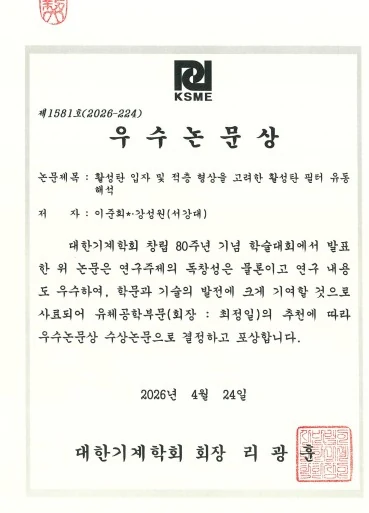
Graduate Student Jun-hee Lee (Mechanical Engineering)Wins Outstanding Paper Award at the 2025 KSME Annual Conference
Jun-hee Lee, an M.S. student in the Department of Mechanical Engineering (advisor: Prof. Seongwon Kang), received the Outstanding Paper Award at the 2025 Annual Conference of the Korean Society of Mechanical Engineers (KSME).
Lee was recognized for his research on flow analysis of activated carbon filters for air purification in hydrogen vehicles, which took into account the shape of the activated carbon particles and their packing geometry.
- Title: Flow Analysis of Activated Carbon Filters Considering Particle and Packing Geometry
- Authors: Jun-hee Lee, Seongwon Kang
- Organizer: Korean Society of Mechanical Engineers (KSME)
Awards
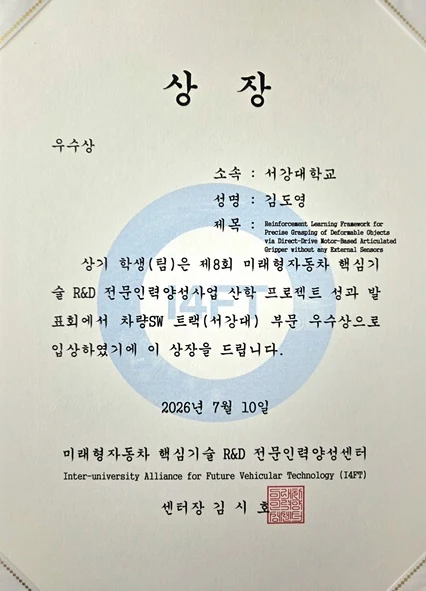
Graduate Student Do-young Kim (Mechanical Engineering)Wins Excellence Award at the 8th Future Vehicle Core TechnologyR&D Workforce Training Program Results Presentation
Do-young Kim, an M.S. student in the Department of Mechanical Engineering (advisor: Prof. Seokhwan Jeong), received the Excellence Award at the 8th Industry-Academia Project Results Presentation of the Future Vehicle Core Technology R&D Workforce Training Program.
Kim presented the project “Reinforcement Learning Framework for Precise Grasping of Deformable Objects via Direct-Drive Motor-Based Articulated Gripper without any External Sensors,” which uses reinforcement learning to enable a direct-drive, motor-based multi-joint gripper to grasp deformable objects without sensors and without damaging them.
A total of 17 teams from five universities—Sogang University, Yonsei University, Korea University, GIST, and Incheon National University—took part. Kim placed first overall in the oral presentation with a score of 99.4 out of 100 and received the Excellence Award in the Vehicle Software track.
Awards
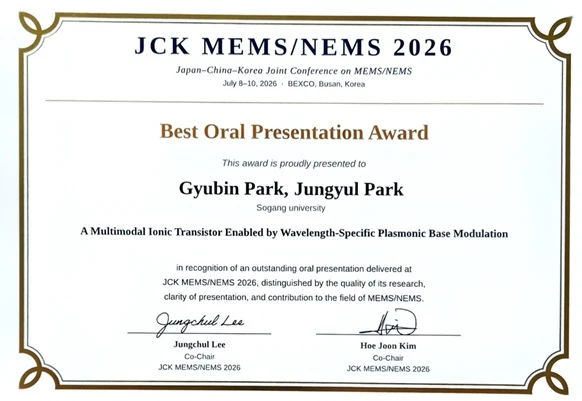
Graduate Student Gyu-bin Park (Mechanical Engineering)Wins Best Oral Presentation Award at JCK MEMS/NEMS 2026
Gyu-bin Park, an integrated M.S.-Ph.D. student in the Department of Mechanical Engineering (advisor: Prof. Jungyul Park), received the Best Oral Presentation Award at the Japan-China-Korea Joint Seminar on MEMS/NEMS (JCK MEMS/NEMS 2026), held July 8–10 at BEXCO in Busan.
Park presented his research titled “A Multimodal Ionic Transistor Enabled by Wavelength-Specific Plasmonic Base Modulation.”
The study proposed a multimodal ionic transistor that can optically and electrically control ion transport and current amplification within nanochannels, by exploiting the way a plasmonic base made of gold and silver nanoparticles responds differently depending on the wavelength of incident light.
Awards
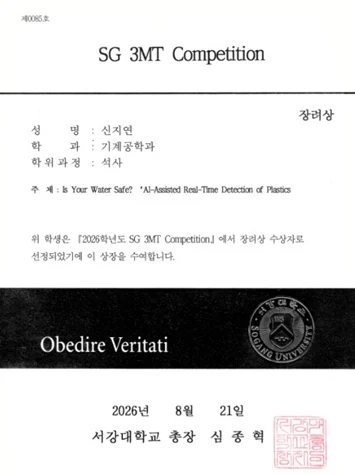
M.S. Student Ji-yeon Shin (Mechanical Engineering)Wins Honorable Mention at the 2026 Sogang UniversityGraduate School SG 3MT Competition
Ji-yeon Shin, an M.S. student in the Department of Mechanical Engineering (advisor: Prof. Bonggeun Chung), received an Honorable Mention (with a prize of KRW 500,000) in the finals of the 2026 SG 3MT Competition, an English presentation contest hosted by the Sogang University Graduate School. Shin gave her English presentation on the topic “Is Your Water Safe? AI-Assisted Real-Time Detection of Plastics.” The research combines AI with on-site, rapid, real-time microplastic detection technologies to tackle microplastic contamination in water environments. She was highly praised for conveying complex engineering principles and their social impact to the audience clearly and persuasively in English within the strict three-minute limit.
The 3MT (Three Minute Thesis) competition is an academic contest hosted by the Sogang University Graduate School in which graduate students compete to communicate their thesis research effectively to a non-specialist audience, using just a single slide and a three-minute presentation in English.
Alumni Spotlight
College of Engineering Alumni Spotlight
Kyu-han Yoon (Electronic Engineering, ’77)
▲ Kyu-han Yoon (Electronic Engineering, ’77)
1. Hello! Could you start by introducing yourself?
I entered Sogang in 1977 in the science and engineering track, and a year later I chose electronic engineering as my major. Back then, Sogang let students decide their majors based as much as possible on their own wishes, without being constrained by department quotas—something that left a strong impression on me.
I went on to graduate school, specializing in semiconductor devices, and after earning my master’s degree I joined Goldstar Semiconductor. I then spent about 25 years devoted to memory R&D at Hynix (now SK hynix), and retired after serving as head of the Memory and CIS Development Division.
After that, I was appointed as a professor at my alma mater, where I worked on industry-academia collaboration projects, taught practical semiconductor courses, and provided career mentoring and coaching. With the end of this year’s first semester, I have also wrapped up 17 years at the university.
Looking back, I started my career just as Korea’s memory industry was being born. I feel I was right in the middle of its long journey—overcoming fierce competition to rise to number one in the world, and then working tirelessly to hold on to that position.
When I returned to Sogang, I didn’t want my experiences to remain mere “war stories from the past”; I wanted to pass them on in a way that would help younger students take on the challenges of the future. Being able to spend that time with the faculty and students was truly precious to me, and I consider myself very fortunate.
2. You must have many memorable and rewarding experiences from your time in industry and academia. Could you share a few?
When I joined the company at the end of 1983, Korean companies were just jumping into the memory market as latecomers, competing against numerous firms from Japan, the United States, and Europe. The semiconductor industry was widely regarded as a “3D” (dirty, difficult, and dangerous) industry at the time, and it was a truly tough environment.
We obtained chips from the industry leaders and our competitors and benchmarked them in every way we could, and we actively attended overseas conferences and short courses. We kept learning and pushing ourselves, trying to pick up even the smallest hint.
In particular, I felt we needed to really understand Japan, which was the undisputed powerhouse in DRAM at the time, so I even taught myself Japanese. During a technical training program in Japan, I discovered an important clue for improving refresh characteristics—one of the core technologies of DRAM—and we went on to develop it into our own technology.
Building up our technological capabilities step by step until, at some point, we could bring competitive memory products to the global market—that still feels thrilling to me today. Sometimes I still can’t believe it happened, but I take great pride in having contributed, even in a small way, to K-memory semiconductors becoming globally competitive as they are today.
After joining the faculty at Sogang, I consistently taught a course called “Nano-Semiconductor Devices and Process Practice.” About 70 to 90 students took it each semester, and I tried to design the class so that students could experience, at least indirectly, the real concerns and decision-making processes of the industry.
Rather than dwelling on equations, I focused on the physical properties and phenomena of semiconductors, and above all had students rigorously work through the cause-and-effect question of “why does this result occur?” I also placed great importance on the patient process of finding answers on their own while solving problems.
My midterm and final exams likewise consisted of more than ten questions, all essay-style, asking students how they would solve a problem. Grading alone took a full week, and there were times I regretted it, wondering “Why did I go this far?”—but I never gave up.
Another memorable experience was taking part, as the hands-on lead while I was at Hynix, in building an industry-academia collaboration track program with Sogang. Thanks to the passion and active involvement of the semiconductor faculty, we were able to produce meaningful results for both sides, and this later laid the foundation for the establishment of the SK hynix contract-based semiconductor department.
I believe this was the result of industry truly recognizing the outstanding capabilities of our professors and the excellent education and operational systems of Sogang University.
3. What was your college life like at Sogang?
As the very origin of the word “university” suggests, I see a university as a community where diverse fields of study meet and converge.
Sogang is not a large university, but that actually gave it the advantage of letting students learn broadly across many fields. I was able to take courses fairly freely in philosophy, economics, psychology, theology, and more, which broadened my perspective.
I also remember being puzzled in my sophomore year, at the first session of an electronic engineering major course, to see so many unfamiliar faces. It turned out most of them were upperclassmen retaking the course. I still vividly remember thinking, “This class isn’t going to be easy,” and feeling quite nervous.
It was also a very turbulent time in society. I took part in political debates and demonstrations, and at times I also received scholarships.
Above all, I think the “Sogang premium” built up over many years by the alumni who came before me helped me a great deal when I entered the working world after graduation.
4. Finally, do you have any words of advice for current students?
I’d like to share the poem “Grass Flower” by the poet Tae-joo Na with our students.
I hope you will look at yourselves a little more closely, and for a little longer, so that you can discover your own beauty and potential.
And I hope you will go on to find your beautiful and lovable selves, your neighbors, the precious people in your lives, and the work and calling you can carry with you for the rest of your lives.
Research Achievements
Research Achievements
Research Publications, June–August 2026
Click a paper title to search for it on Google Scholar.
Prof. Jangsaeng Kim’s Lab(System Semiconductor Engineering)
Q. Hello, Professor. Please introduce yourself to the readers of the College of Engineering e-Newsletter!
Hello. I’m Jangsaeng Kim, and I serve in the Department of System Semiconductor Engineering and the Department of Electronic Engineering. I earned my bachelor’s and doctoral degrees from the Department of Electrical and Computer Engineering at Seoul National University, gained research experience as a postdoctoral researcher at the Massachusetts Institute of Technology (MIT), and joined Sogang University in March 2025. It has already been a year and a half since I started working with students here at Sogang. I currently run the 3D AI Semiconductor Lab (TAIS Lab), where we study next-generation semiconductor devices and the AI hardware built on them. I work alongside my students, thinking through problems together, so that they can grow into researchers who identify and solve problems on their own, grounded in solid knowledge of their field.
Q. Please tell us about your main research areas.
My main research areas are semiconductor devices, 3D integration technology, and the artificial intelligence hardware that builds on them. We study the materials, structures, and operating principles of semiconductors so that AI can process more information with less power and a smaller footprint.
First, we research “in-memory computing,” in which the memory that stores data also performs part of the computation itself. In conventional computers, a great deal of time and energy is spent simply moving data back and forth between memory and the processing unit. We aim to reduce this data-movement burden using silicon-based flash memory, ferroelectric devices, and more. In particular, neuromorphic computing systems, inspired by the way the brain processes information, emulate some of the functions of synapses and neurons with semiconductor devices and harness the devices’ electrical characteristics for both storing information and computing, enabling efficient AI operations.
Another key area is “3D integration technology,” which stacks semiconductor devices vertically. Just as building multiple floors on the same plot of land makes efficient use of space, this technology places more devices within a limited area and connects memory and logic circuits closely together. But simply stacking higher isn’t enough. The process of building an upper layer must not damage the devices on the layers below, and the devices on each layer must operate uniformly and reliably. To achieve this, we study device structures and fabrication processes together.
Building on these ideas, our lab places great importance on designing and fabricating devices ourselves and on examining how they perform when applied to AI systems. Ultimately, our goal is to go beyond improving the performance of individual devices and develop semiconductor technologies that deliver both energy efficiency and reliability in real-world applications.
Q. What was your dream when you were in college?
I didn’t have a clear dream of becoming a professor from the start. As an undergraduate, I thought about studying my major well and getting a job in a related field. Then I took a course on semiconductor devices and became interested in the field, and in graduate school I discovered the joy of research: exploring problems that don’t yet have set answers and testing my own ideas. As those experiences accumulated, my desire to keep doing research grew, and I chose the academic path. Looking back, rather than planning my career in detail from the beginning, I think my direction gradually became clearer as I discovered, through study and research, what I find interesting.
Q. Lastly, do you have any words of advice for College of Engineering students?
I hope you won’t narrow down your possibilities too early during your time in college. Take part in classes, projects, and research that interest you, listen to the experiences of professors and senior students, and look for a field that truly interests you and that you can immerse yourself in. Even if your career path isn’t clear yet, I think what matters is not rushing, but finding the direction that suits you through a variety of experiences.
In your studies, I encourage you to build both an understanding of theory and hands-on experience applying it. When an experiment or project gives you unexpected results, carefully working out why, and sharing questions and ideas with the people around you, will build your ability to solve problems on your own. I hope you grow into engineers who take charge of shaping your own futures while staying open to new possibilities. I’ll be there with you along the way, sharing my experience and knowledge.
Student Activities
Student Activities
From Design to Fabrication:Department of Mechanical Engineering Opens the ‘ME Design Space’ Workshop
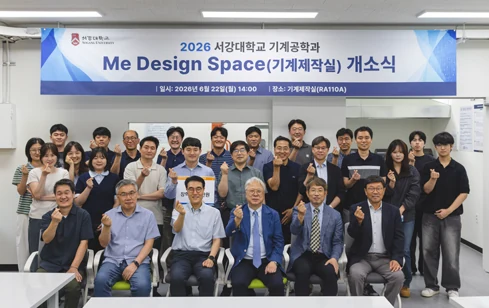
Applying what students learn in engineering classes to real design and fabrication requires an environment where they can build and test their ideas firsthand. To help students gain this experience and turn their ideas into physical objects, the Department of Mechanical Engineering has renovated its machine workshop. The ‘ME Design Space,’ which held its opening ceremony on June 22 at 2 p.m., is a revamp of the former machining-focused lab, redesigned so that undergraduate and graduate students can carry out coursework and projects while experiencing the entire process from design to fabrication.
▲ Opening ceremony of the machine workshop
The workshop’s new name was chosen through a naming contest open to members of the university. ‘ME’ carries a double meaning: ‘Mechanical Engineering’ and ‘Me,’ referring to each individual student. It can also be read as a message that each student’s ideas come together to drive engineering forward. The opening ceremony was attended by Prof. Emeritus Nahmkeon Hur, who donated development funds to create the space, along with Jinwook Burm, Dean of the College of Engineering; Jeong-woo Choi, former Dean of the College of Engineering; and faculty, students, and staff of the Department of Mechanical Engineering.
Among the equipment available in the space is an FDM (fused deposition modeling) 3D printer, which heats plastic filament, extrudes it through a nozzle, and builds three-dimensional shapes layer by layer. Unlike subtractive machining, which forms shapes by cutting away material, this method adds material only where it is needed and is used to turn computer-designed parts into physical objects. With printed parts in hand, students can check the size and shape they had only seen on screen and compare their design dimensions with the actual results.
How the workshop will be used becomes clearer when viewed alongside the department’s design projects. The Capstone Design topics announced by the Department of Mechanical Engineering for the Spring semester 2026 include the development of a robotic hand and a four-finger gripper, as well as a vibration reduction system. When conceiving devices like these, in which many parts move together, students need to review not only the shape of each part but also how the parts behave once connected. For example, when designing a gripper, students can use the workshop to make several versions of the surfaces that contact objects and compare them, or to build the joints and linkages first to check their range of motion. What a prototype looks like, and how much of it is built, depends on what it is meant to test. Within the limits of the equipment and materials, students can test the uncertain parts of a design first and feed the results into the next stage of fabrication. Along the way, they learn to decide for themselves where to invest limited time and materials, and what evidence they need before moving on to the next stage.
This kind of prototyping and performance verification is also a core part of the work of engineers in product development. In industry, engineers use test data to judge whether a design meets its performance requirements and decide whether to finalize it or revise it further. When results differ from expectations, they must examine material properties, part geometry, fabrication conditions, and other factors together to find a way to improve. Projects carried out in the workshop are expected to give students a chance to experience this kind of work as undergraduates and to build the ability to justify the soundness of their designs with evidence.
A notable feature of the 3D printer room is its self-managed operation, led by the Mechanical Engineering student council. Under the usage rules announced by the department, the student council has been delegated operating authority and sets the detailed operating procedures, with its officers handling consumables and routine inspections. Equipment consumables such as nozzles and build plates are funded by the department budget, while users supply their own printing filament. The space is open to undergraduate and graduate students in Mechanical Engineering, who may use it without a reservation after completing a one-time training session on equipment operation and safety. Operating hours follow those of the staff member in charge, 9 a.m. to 5 p.m. on weekdays; the space is not available on weekends, public holidays, or at night. Use for classes, research, and academic purposes takes priority, while commercial or personal for-profit use is restricted. As the equipment is shared, monopolizing it for long periods is not allowed, and large prints require prior arrangement. Safety and maintenance rules are also posted, including ensuring adequate ventilation while printing, stopping use and contacting the manager if anything goes wrong, and cleaning up after use.
Through the newly renovated ME Design Space, the Department of Mechanical Engineering plans to support design and fabrication education and project work for undergraduate and graduate students. Taking this opening as an opportunity, the department plans to strengthen hands-on education and continue expanding a learning environment where students can experience the entire process from design to fabrication.
Written by Ji-woo Lee (Student Reporter, Chemical and Biomolecular Engineering, ’24) Photos courtesy of the Department of Mechanical Engineering website, Sogang University
Student Activities
A Creative Playground for Undergraduates – The Creative Convergence Independent Research Program
Going beyond learning theory in the classroom, ‘hands-on research,’ in which students define problems themselves and work out solutions, is emerging as a new core of undergraduate education. In step with this trend, Sogang University offers the <Creative Convergence Independent Research Program> every semester, a program in which undergraduates lead their own research.
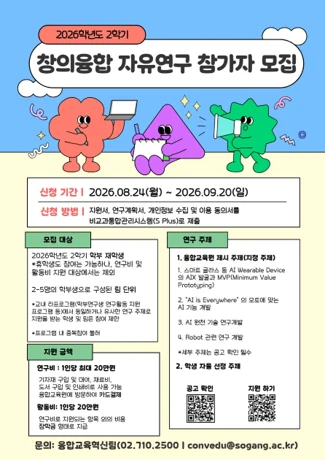
The program is one of Sogang’s flagship extracurricular activities, open to every Sogang undergraduate regardless of major or year. Teams of two to five students explore either a designated or a self-selected topic over one semester and submit a final report. Applications can be submitted through S Plus, Sogang University’s integrated extracurricular system. New teams are recruited around March (Spring semester) and September (Fall semester) each year, so interested students are strongly encouraged to apply during the recruitment period.
▲ Poster for the 2026-2 Creative Convergence Independent Research Program,courtesy of the Convergence Education Innovation Team
■ From Designated to Open Topics: A Broad Spectrum of Research
Participating teams can design their research around either a designated topic proposed by the Institute of Convergence Education or an open topic chosen by the team. The designated topics span a wide range of the latest engineering trends, including discovering AIX (AI transformation) opportunities with AI wearable devices, developing AI functions applicable to fields such as travel, education, and culture, research on core AI technologies such as LLMs, STT, and OCR, and R&D related to collaborative robots. With open topics, teams plan research around subjects that interest them, making the program a place to step outside the set curriculum and cultivate creative, interdisciplinary thinking by asking their own questions and finding their own answers.
■ Beyond ‘Learning by Listening’ to ‘Learning by Doing’: The Value of Undergraduate Research
According to higher education research by George D. Kuh, associated with the Association of American Colleges and Universities (AAC&U), undergraduates’ independent participation in research is regarded as a leading ‘High-Impact Practice’ that dramatically enhances critical thinking and complex problem-solving skills. In practice, however, university curricula are dominated by theory-based major courses and standardized lab sessions, so opportunities for undergraduates to plan and lead the entire research process themselves remain scarce. Against this backdrop, Sogang’s <Creative Convergence Independent Research Program> gives undergraduates the chance to extend classroom knowledge into real research projects, and it provides selected teams with research and activity funding, creating an environment where students can immerse themselves in research without a financial burden. Teams conduct their research independently during the semester and submit a research report at the end of the term, naturally building both self-directed learning skills and creative, interdisciplinary competencies along the way.
■ The Joy of Research, in Participants’ Own Words
Feedback from students who have taken part in the program has been positive. Participants said, “It was great to have the chance to do the research I wanted as an undergraduate,” and “I learned a lot from listening to other teams’ presentations,” highlighting the experience they gained from exchanges between teams. Rather than searching for set answers, students form their own questions and work through them, and the Creative Convergence Independent Research Program serves as a creative playground where undergraduates can experience that process to the fullest.
■ Beyond the Report: Expanding Research into the Wider World
The value of the Creative Convergence Independent Research Program does not end with a single semester of research. Depending on the students’ ambitions, the results they build during the program can serve as a springboard to bigger stages, such as publication in domestic and international journals, patent applications, external competitions, or Sogang’s own Creative Convergence Competition. In fact, many completing teams have developed ideas from the program into further research or continued in-depth research after entering graduate school, achieving strong research outcomes.
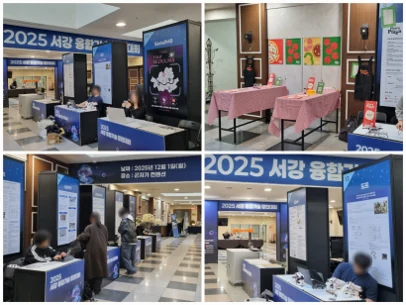
▲ Participants at the 2025 Sogang Convergence Technology Competition, courtesy of the Convergence Education Innovation Team
■ Asking Questions Without Right Answers: Convergence Research Where Even Failure Becomes an Asset
Undergraduate-led research always carries the risk of failure, since hypotheses often turn out to be wrong and experiments frequently run into unexpected obstacles. Yet the program values the ‘process of trying’ itself more than a perfect answer. As team members from different majors put their heads together and correct course through trial and error, students learn a communicative and academic flexibility that cannot be gained from simply acquiring theory. Taken together, these fearless attempts build the resilience and self-reliance that future interdisciplinary talent will need. As the saying goes, “The risk of failure is part of trying.” We cheer on the dreams of undergraduates who will keep growing through bold challenges and research.
Written by Han-bit Koo (Student Reporter, Electronic Engineering, ’24) Photos courtesy of the Convergence Education Innovation Team, Sogang University